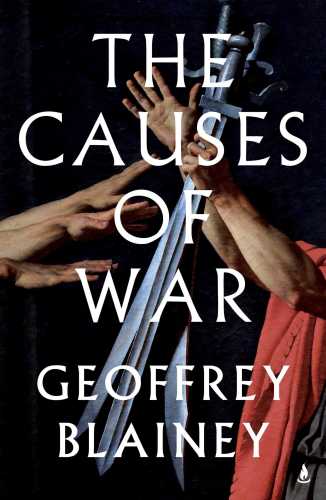
The Causes of War
From 1700 to today, 4th edition
By Geoffrey Blainey
Published by Scribner Australia
RRP $49.99 in hardcover
ISBN 9781761635236
Geoffrey Blainey is Australia’s best-known historian. In the late 1960s when he was the professor of economic history at the University of Melbourne, he began the research for the first edition of this book that appeared in 1973.
It was to become one of the more widely quoted books on the causes of war, appearing on reading lists of military academies and universities in a number of countries.
After studying more than 200 years of conflict, he discovered a surprising fact.
Those national leaders who made the decision whether or not to wage war against one another usually held contradictory thoughts. Each expected to defeat its enemy, but obviously that is an impossible outcome.
In other international wars, one nation had expected to win but the rival nation at least expected to avoid defeat.
This is his first revision of the book since 1988 with a new chapter – Chapter 18 – The Cold War became a Warm War.
There are several ideas in this book that catch the eye.
Has anyone ever described Silicon Valley as ‘a kind of sperm donor to new-age businesses’ in China? But we get the picture.
US technological developments have aided China’s rise to a point of challenging US hegemony.
There’s another puzzle which he espouses and which resonates loudly in today’s environment: ‘how can nations, having started a war, readily find a way of ending it?’
There’s a lot to absorb in this latest edition as Blainey charts the shift in global power, away from a Europe in decline.
Would Putin have been so bold to invade Ukraine if he hadn’t been confident that ‘Europe’s combined armies would be primarily a spectator’?
He predicts that new technology of warfare will arise and possibly, in a distant decade, one government will rule the whole world, unsettling and perhaps alarming predictions.
Blainey has successfully reshaped a book he first began work on more than half a century ago to include the contemporary world we now inhabit.
His writing is clear, concise and highly readable; his ideas thought-provoking and unsettling. It is without doubt a must read for any one whose decision-making influences our national perspective.
FULL REVIEW AT THIS LINK:
https://www.theaustralian.com.au/news/blainey2/video/36928d4afba0f57a85915b93015afc28

