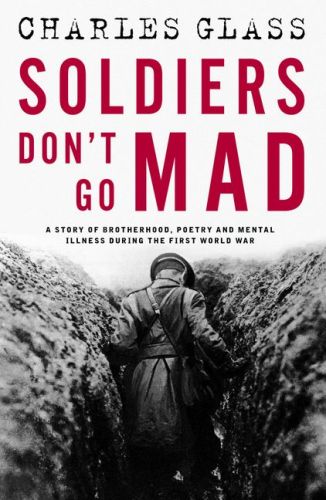
Soldiers Don’t Go Mad
By Charles Glass
Published by Bedford Square; Dist. by Harper Collins Aust.
RRP $24.99 in paperback
ISBN 9781835010174
An interesting aside to this book is Charles Glass’s revelation that he suffered a ‘near-fatal bout of COVID-19’ during the writing of this book, which makes his achievement all the more remarkable.
The Great War, as it was known, was the first, truly industrialized war in which the weaponry was capable of mass casualties, on a scale never seen on the battlefield before.
‘It was not combat so much as slaughter,’ Glass writes in his introduction.
In one day, nearly twenty thousand British soldiers died, while another forty thousand suffered wounds or went missing in action. Those who survived witnessed unprecedented horror. The result: men, physically intact but psychologically and spiritually broken.
Glass reveals the complete lack of preparedness by the British Army to deal with the extent of the mental breakdown. Treatment, of course, was in its infancy.
One story in particular captured Glass’s imagination: that of Second Lieutenant Wilfred Owen, twenty-four years old when he was admitted to the newly established Craiglockhart War Hospital for treatment of shell shock and fellow officer, Siegfried Sassoon, a nascent poet trying to make sense of the terror he had witnessed. He was admitted to Craiglockhart one month after Owen, having refused to return to the front after being wounded during battle.
Over their months at Craiglockhart, each encouraged the other in their work, their personal reckonings with the morality of war, and their treatment. Therapy provided Owen, Sassoon, and their wardmates with insights that allowed them to express themselves better, and for the 28 months that Craiglockhart was in operation, it notably incubated the era’s most significant developments in both psychiatry and poetry.
Soldiers Don’t Go Mad tells for the first time the little known story of the soldiers and doctors who struggled with the effects of industrial warfare on the psyche.
By investigating war’s ravaging effects on mental health from the earliest days of modern warfare, Glass offers us an understanding of the origins of what we now know as PTSD. That he chooses to do so through the lens of poetry is unique.
—
 militarybooksaustralia.com